The ecliptic Zodiac Ring
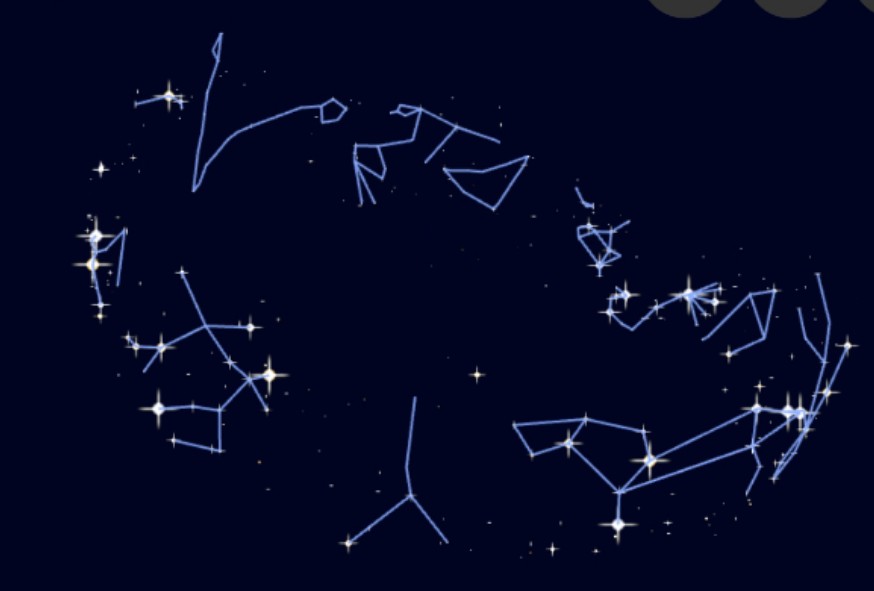
In early civilizations — particularly Babylonian, Egyptian, and early Greek — planets where identified by observing their motion against actual star constellations. The Moon, Sun, and planets were tracked as they wandered through recognisable stellar patterns. In Babylonian astronomy the sky was divided into constellational regions, not degrees. The stars were seasonal markers. The most important observation was the vernal equinox, it marked the beginning of the new year and the first month of the Babylonian calendar.
Many centuries later, greek astronomers noticed something unsettling:
The vernal equinox no longer rose in the same stars as it was documented in the ancient texts. This was because of axial precession. Axial precession is the slow wobble of Earth’s rotational axis around itself, like a spinning top. This means earths axis rotates around itself and it traces a circle every ~25,772 years. The suns position relative to the stars during the equinox moves ~1° every 71–72 years. Over ~2,160 years, the equinox shifts by 30° or by one zodiac sign.
To account for this change in observational diaries, around the 5th–4th century BCE, Babylonian astronomers fixed the zodiac to the ecliptic, not the stars. So the vernal equinox would always be on 20 March when earths is position is exactly between Libra and Virgo. They divided the Sun’s yearly path into 12 equal segments of 30°, starting from the vernal equinox. Back then signs aligned with actual star constellations.
But because thats over 2000 years ago the ecliptic zodiac and the real constellations zodiac signs are almost exactly 1 position (30°) shifted. So when astrologers talk about a planet being in Sagittarius, its actually infront of the star constellation of Scorpio!
Then Greek astronomers, particularly Hipparchus (2nd century BCE), formally identified precession. Rather than abandon astrology, Greek thinkers reinterpreted it: from seasonal Markers the zodiac became symbolic interpretations about life and psychology. This is an ongoing process and most modern astrological models are rather a reinvented story than based on true observation as Ptolemy intended when he formalised astrology.